
When G.I.'s Wrote Home
10/11/26 05:10
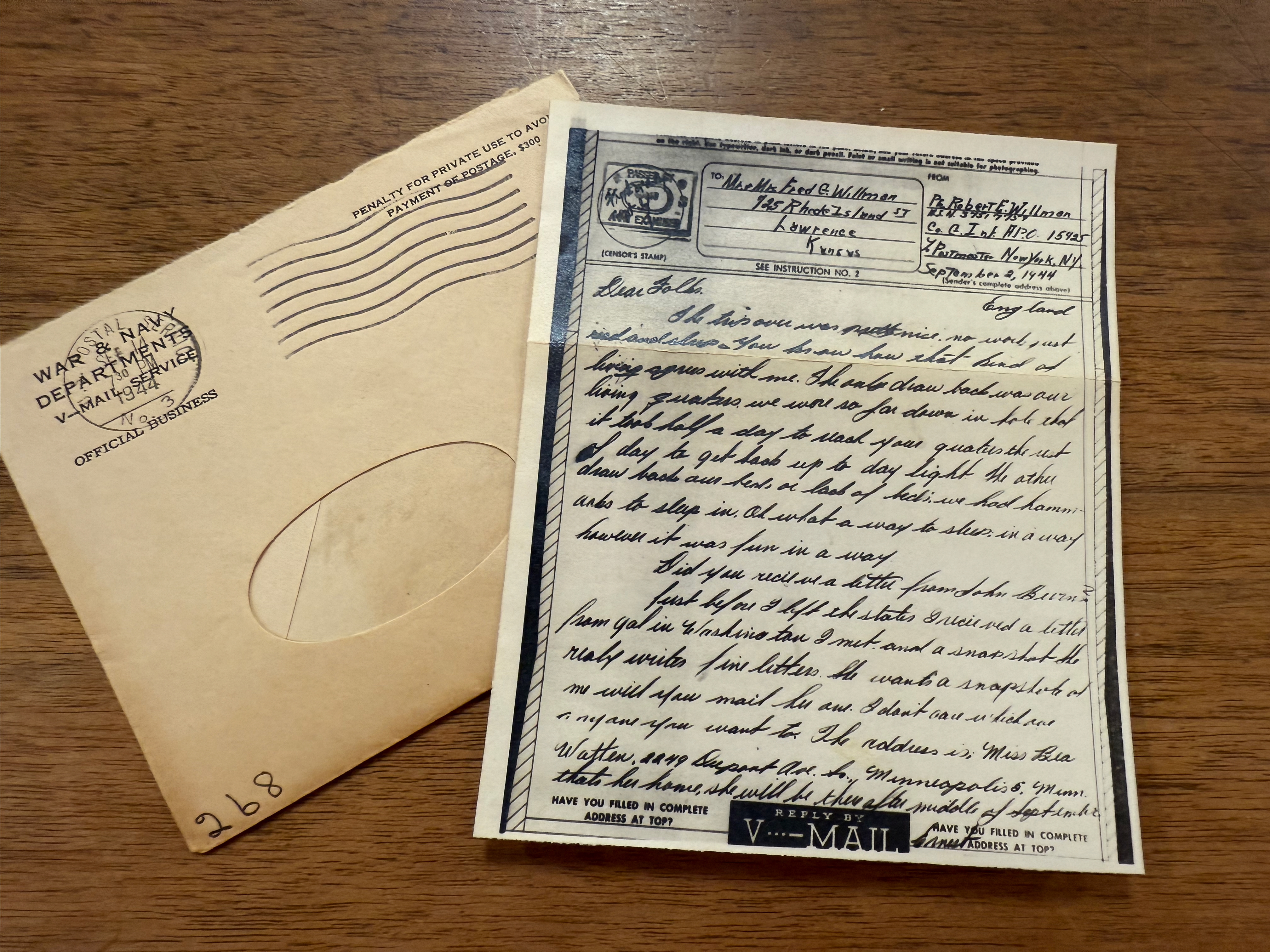 November 10, 2026 (Vol.20 No. 41) - I am not a veteran. I do not see that as either a positive or negative. Different people, growing up at different times and under different circumstances follow different paths. However, that does not mean that I am indifferent when it comes to America's men and women who have served their country in uniform. I am unabashedly grateful for the sacrifices they have made - with many making the ultimate sacrifice, what Abraham Lincoln called "the last full measure of devotion."
As we celebrate the men and women of our armed services this Veterans Day - perhaps commemorate or consecrate are more appropriate terms - this year's observance is for me especially poignant. As I noted in a previous post, I have been spending much of the last three months in the University of Kansas Archives reading their letters home to their wives and/or parents here in Lawrence while serving during the Second World War. This research is being conducted in connection with a book project I have undertaken. This is tedious work. But it is also a labor of love.
Since July, I have read hundreds of letters home from six G.I.'s with Lawrence connections. These soldiers and airmen ranged in rank from Private to Lt. Colonel. Some served in the European Theater of Operations while others served in the Pacific. Their jobs ranged from field artillery, to clerk, to tail-gunner, to medical officer, to navigator to division commander. Some served in the most famous battles of the war, such as D-Day and the Bridge at Remagen a/k/a A Bridge Too Far. One of these letter writers believes that he served on the very last bombing mission of the war. At this stage of my research, they were all white men - although I plan to expand that pool as my research continues.
Having spent these past few months reading their private communications - and keeping in mind that their families donated these letters to the archives for this kind of research - one gets a sense of each man's personality. They were very different people. However, I have discerned some common themes.
First, they were very loyal correspondents. At a time where there was no e-mail and long distance telephone calls were challenging both in terms of technology and national security, they wrote letters home practically every day. Because the lag time between the mailing of the letter and its arrival at its destination - often weeks and occasionally months - there is not running commentary on the latest war news. It's all personal, often focused on telling family and friends about their lives in the service and inquiries about what has transpired at home. Occasionally, the G.I.'s had strong opinions to share, but nothing earth-shattering. One G.I. wondered how Hollywood would survive after the war if they were to continue making what he thought were lousy movies. Another G.I. loved the boots his parents had sent, saying they were the envy of his squad. And they had a particular dislike for the Germans - especially after the Allies uncovered their concentration camp atrocities.
There's another aspect of these letters that was fairly consistent: The G.I.'s desire to reassure families of their personal safety in both what they said - and didn't say. The banter was usually light. They may have discussed the quality of their living conditions - especially those who trained in the California desert - and the tedium of doing K.P.. However, they did not dwell on the dangers of combat. Even when writing about deaths that may have occurred during training, the tone is almost matter-of-fact and personally detached. One soldier said he rarely carried his gun. Two of the G.I.'s suffered service-related injuries, but either denied in letters home that they had happened or minimized them. This strategy wasn't always successful: It's hard to dismiss a shrapnel wound that kept one soldier hospitalized for six months.
Most of all, these letters tell the stories of ordinary people living in extraordinary times. These were men enduring real hardships with as much dignity and positivity as possible. They took pleasure in simple things: clean sheets, ice cream, ice cold Coca-Cola and, of course, letters from home. These are the men and women who saved the world from tyranny. They are not exhibiting the so-called "Warrior Ethos" about which our dim-witted Secretary of Defense, er, I mean Secretary of War, is constantly preaching. What these letters have shown is that these people - real American heroes - didn't have to act heroic because they were heroic. And no amount of Pentagon puffery will change that.
To the men and women who have served our nation faithfully these past 250 years, we all owe you a debt of gratitude. Not because of some politician's fantasy of who an American warrior should be, but because you have been who you are - one of us. That's it for now. Feature the Turtle.